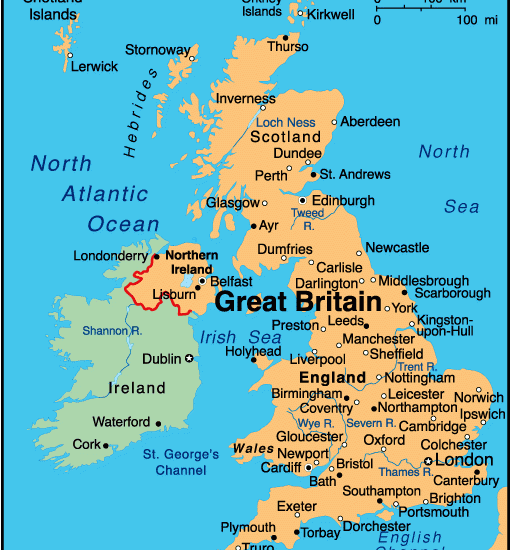
The United Kingdom (UK) is a country located in northwestern Europe, made up of four constituent countries: England, Scotland, Wales, and Northern Ireland. It has a total area of about 243,000 square kilometers. It has a diverse geography and a wide range of weather and climate patterns due to its location between the North Atlantic Ocean and continental Europe. Here’s a breakdown of the UK’s geography, weather, and climate:
Geography of the UK
England: Characterized by rolling hills, low mountains, and flat plains, especially in the southeast. The Pennines (sometimes called the “backbone of England”) are the major mountain range running north-south. The Lake District in the northwest is famous for its mountains and lakes.
- Area: Approximately 130,000 square kilometers.
- Geography: Mostly lowland terrain with rolling hills and flat plains, especially in the southeast. The Pennines (known as the “backbone of England”) run through the north, and there are moorlands in the southwest (Dartmoor, Exmoor).
- Climate: Temperate maritime, with mild summers and cool, wet winters. The southeast tends to be drier and warmer than the northwest.
- Seasons: Four distinct seasons. Spring and autumn are mild and variable; summers are warm (rarely hot), and winters are cool and damp.
Wales
Wales: Known for its mountainous landscapes, particularly the Snowdonia National Park, which contains Mount Snowdon, the highest peak in Wales. It also has beautiful coastlines, especially along Pembrokeshire.
- Area: About 20,700 square kilometers.
- Geography: Mountainous, especially in the north and central regions (e.g., Snowdonia), with coastal plains in the south. Rich in rivers, valleys, and rugged coastline.
- Climate: Similar to England but generally wetter and windier, especially in the west. Snow is more common in the higher elevations.
- Seasons: Also experiences four seasons. Winters are wetter and cooler, particularly in the mountains; summers are mild with occasional heatwaves.
Scotland
Scotland: Known for its rugged terrain, Scotland has the Scottish Highlands, which include the highest peaks in the UK, such as Ben Nevis. The country is also home to many islands, including the Hebrides and Orkney Islands. There are many lochs (lakes), with Loch Ness being the most famous.
- Area: Around 78,000 square kilometers.
- Geography: Very diverse, with highlands in the north and west (including Ben Nevis, the UK’s highest peak), lowlands in the central belt, and many islands off the coast. Known for its lochs and glens.
- Climate: Cooler and wetter than the rest of the UK. The west coast is very rainy, while the east is drier and more sheltered.
- Seasons: Winters can be quite cold and snowy in the Highlands. Summers are cool to mild, with long daylight hours in the north.
Northern Ireland
Northern Ireland: Has a mix of mountains, such as the Mourne Mountains, and lowlands. The coastline features areas like the Giant’s Causeway, famous for its unique rock formations.
- Area: Approximately 14,100 square kilometers.
- Geography: Hilly and green, with mountains like the Mourne Mountains and extensive loughs (lakes), including Lough Neagh, the largest lake in the UK.
- Climate: Temperate maritime, with mild temperatures year-round. It receives steady rainfall, especially in the west.
- Seasons: All four seasons are present. Winters are cool but rarely harsh, and summers are mild with frequent cloud cover.
If you’re a Nepali citizen planning to study in the UK, you’ll need to apply for a UK student visa, typically a Student Visa (formerly Tier 4), which allows international students to come to the UK for full-time study at a recognized institution. Here’s a detailed guide on the requirements and the process for applying for a UK student visa from Nepal:
- Eligibility Criteria for a UK Student Visa
To be eligible for a UK Student Visa, you must meet the following criteria:
- Confirmed Offer of Admission:
- You must have an unconditional offer from a UK educational institution that is approved by the Home Office (a Tier 4 sponsor).
- You will receive a Confirmation of Acceptance for Studies (CAS) from your university or college. This document is crucial for the visa application process and proves that you have been accepted to study in the UK.
- Financial Requirements:
- You must demonstrate that you have enough money to cover your tuition fees and living expenses for the duration of your stay in the UK.
- The amount required depends on where you will be studying and your personal circumstances. As a general guideline:
- Tuition Fees: You must show you can pay for the tuition fees for the first year of your course.
- Living Costs: You must show you have at least £1,334 per month for living costs if you’re studying in London, or £1,023 per month if you’re studying outside of London. This is for a period of up to 9 months (for courses lasting 9 months or longer). For courses shorter than 9 months, the living cost requirement is reduced accordingly.
Note: You can show this money is in your bank account for 28 consecutive days before you apply.
- English Language Proficiency:
- You must prove your English proficiency. This can be done by:
- A secure English language test (SELT) (e.g., IELTS, TOEFL, or Cambridge exams) recognized by the UK government.
- Alternatively, if your previous education was conducted in English, you may be exempt from the language test.
- Genuine Student Requirement:
- You must be able to prove that you are a genuine student, which means:
- You must have the intention to leave the UK once your course is completed.
- You should be able to explain why you want to study in the UK and how the course will benefit your future.
- Health and Immigration Surcharge:
- You will need to pay the Immigration Health Surcharge (IHS) as part of your application. This gives you access to the UK’s National Health Service (NHS) during your stay.
- The charge is typically £470 per year, but it can vary depending on the length of your course.
- Academic Requirements:
- You must meet the academic requirements of the course you want to study, such as having the necessary qualifications, previous degrees, or specific subjects.
- Required Documents for a UK Student Visa (from Nepal)
The documents you need to submit with your visa application may include:
- Passport: A valid passport or travel document, with at least one blank page for the visa.
- Confirmation of Acceptance for Studies (CAS): This will be provided by the institution that has accepted you to study.
- Proof of Financial Support:
- Bank statements or a financial guarantee letter proving you have enough money to cover your tuition fees and living expenses.
- The money must have been in your bank account for at least 28 days before you apply.
- English Language Test Results: Proof of your English proficiency, such as IELTS or another accepted test.
- Academic Certificates: Original and/or translated copies of your academic qualifications and transcripts (e.g., school diplomas, university degrees).
- Immigration Health Surcharge (IHS) Payment: Receipt of payment for the NHS surcharge.
- Visa Application Fee: Payment confirmation for the visa application fee (typically £363 for a student visa).
- Passport-sized Photos: Typically 2 recent passport-sized color photos, as per the UK visa photo requirements.
- Tuberculosis (TB) Test Results: If you’ve been living in Nepal for more than 6 months, you’ll need to provide a TB test certificate from an approved clinic in Nepal (the Nepal Medical College and Teaching Hospital in Kathmandu offers this service).
- Additional Documents (if applicable):
- Previous travel history or visa refusals.
- Evidence of accommodation in the UK (e.g., university-provided accommodation or private rental agreement).
- If you’re applying as a dependent (for example, a spouse), you will need to submit additional documentation.
- Steps to Apply for a UK Student Visa from Nepal
Step 1: Accept Your Offer and Receive a CAS
- Once you have been accepted into a course, you will receive a CAS from your university or college in the UK. This is essential for the visa application.
Step 2: Pay the Immigration Health Surcharge (IHS)
- You will need to pay the IHS fee as part of your visa application, which can be done through the visa application website.
Step 3: Gather Documents
- Collect all the required documents mentioned above, including proof of financial support, academic documents, and your CAS.
Step 4: Complete the Online Application
- Visit the UK Visa and Immigration website (UKVI) and complete the online application form for a Student Visa.
- You’ll need to create an account, fill in your personal details, and answer questions about your course and finances.
Step 5: Pay the Visa Application Fee
- Pay the visa application fee, which is typically £363 for a student visa.
Step 6: Book an Appointment at the Visa Application Centre (VAC)
- After completing your application, you will need to book an appointment at the Visa Application Centre (VAC) in Kathmandu to submit your biometrics (fingerprints and photo).
Step 7: Attend Your VAC Appointment
- On the scheduled date, go to the VAC to submit your biometric data and documents. Ensure you bring all the necessary documents, including your passport, CAS, and proof of financial support.
Step 8: Wait for a Decision
- After submitting your application, you will need to wait for a decision. It typically takes around 3 weeks to get a decision on your visa application, but processing times can vary.
- After Your Visa is Approved
Once your UK student visa is approved, you will receive a sticker or vignette in your passport that allows you to travel to the UK. You may also receive an envelope containing your visa decision and the details on when and where to collect your biometric residence permit (BRP) once you arrive in the UK.
- You should arrive in the UK no earlier than 1 month before your course starts.
- You must collect your BRP within 10 days of arriving in the UK.
- Important Tips
- Apply Early: The UK government recommends that you apply for your visa at least 3 months before your course starts.
- Financial Proof: Ensure that your bank statements or financial evidence clearly demonstrate that the funds are available and have been in your account for at least 28 days.
- CAS Number: Ensure that your CAS is valid at the time of your application and that all information matches your visa application.